Coco’s Road to Adoption

Coco’s First Examination

When Coco arrived as a stray, her condition was concerning right away. She was thin, tired, and uncomfortable after eating. Meals didn’t seem to help her regain strength, and despite having an appetite, her body simply wasn’t benefiting from the food she was given.

Our Animal Health team began a full medical workup to understand what was happening. The results showed Coco had exocrine pancreatic insufficiency (EPI) — a disorder where the pancreas doesn’t produce the enzymes needed to digest food properly. Without those enzymes, nutrients pass through the body instead of being absorbed, leaving animals hungry, weak, and unable to maintain weight.

For Coco, eating wasn’t nourishing her. It was exhausting her.


Building a Care Plan

Managing EPI requires consistency and precision. The veterinary team created a structured daily routine to support her digestion and prevent further weight loss.

Her meals changed completely. Coco began receiving a pre-digested gastrointestinal wet food designed to be easier on her system. Digestive enzyme supplements were added to every meal, twice a day, to help her body process nutrients properly.

Progress didn’t happen overnight.

The early days were quiet — careful monitoring, small adjustments, and patience. Weight gain with EPI is gradual, and every gram mattered. Slowly, her body began to respond. Her coat improved. Her energy lifted. Her posture softened. Coco wasn’t just eating anymore — she was finally being nourished.


Waiting for the Right Home

Although Coco was medically stable, her condition meant she needed a home willing to maintain a lifelong routine. Her food, supplements, and schedule would always be part of daily life.

Days passed as potential adopters met her, learned about her needs, and considered the commitment. Then one visit changed everything.

A couple who had been visiting the shelter met Coco and connected with her immediately. With veterinary clinic experience, they understood what her diagnosis meant and what her care would require. The routine didn’t intimidate them — it reassured them they could help her stay healthy.


Life After the Shelter

In her new home, Coco continued the same feeding schedule and medical plan she had learned at the shelter. Consistency made the difference. With reliable care and a predictable routine, she kept gaining strength and settling into daily life.

Instead of focusing on discomfort, Coco could focus on being a cat — resting comfortably, exploring her space, and enjoying attention from her family. The structure that once stabilized her health became part of a normal, happy routine.


More Than a Diagnosis

Coco’s journey shows how some animals don’t just need time — they need answers. A diagnosis provided direction. A treatment plan provided relief. The right home provided stability.

With all three in place, Coco didn’t just recover.

She finally felt well.
If Dogs Could Talk… You’d Already Know What They’re Saying

Learn How to Talk to Your Dog (Without Saying a Word)

Have you ever wished you could talk to your dog? Really talk — hear their thoughts, their feelings, and what they actually think of that new puppy next door.

Dogs Are Already Talking — We Just Have to Listen

The truth is that dogs are talking to us all the time. They just aren’t using oral communication (aside from the occasional “bark bark!”). Instead, they communicate through their bodies, their faces, and how they move through the world. The challenge isn’t that we can’t talk to our dogs; it’s that most of us were never taught how to listen.

What “Behaviour” Is Really Telling You

That time your dog turned their head away? They weren’t suddenly distracted by a ghost. That moment they briefly froze on a walk? They’re not lost in thought. Even a jump or a bark isn’t automatically “bad” or “stubborn” behaviour. These are all ways dogs tell us how they’re feeling in the moment: unsure, overwhelmed, excited, cautious, or just needing a little space. Understanding canine body language is the foundation of behaviour, training, and strong relationships, and it’s one of the most powerful tools animal guardians can learn.

How Dogs Communicate With Their Bodies

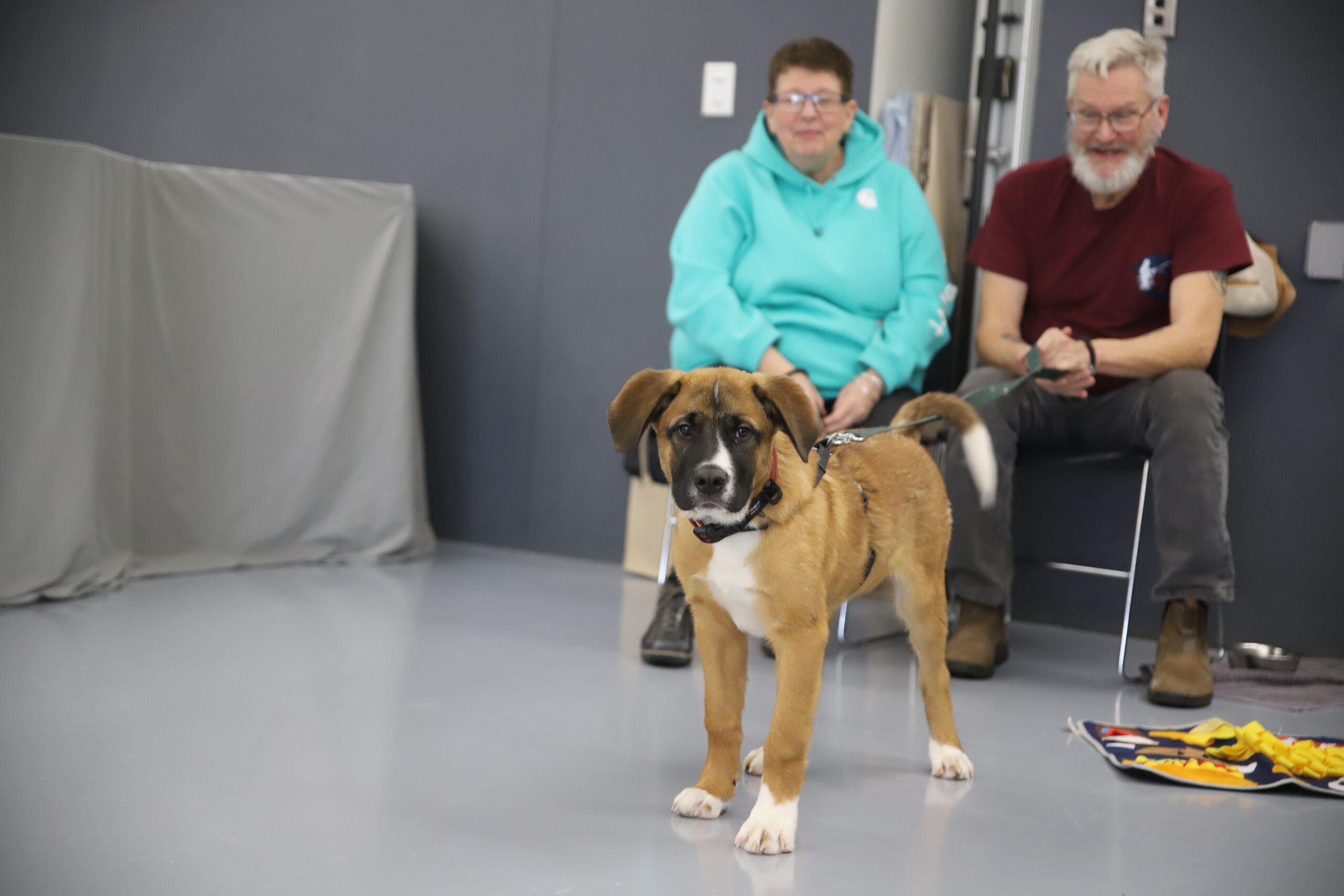
Dogs speak with their bodies. They communicate through posture, facial expressions, movement, and how they use space. Is your dog loose and wiggly, or stiff and tight? Are they leaning forward with curiosity or shifting their weight back to increase distance? Is their body curved and relaxed, or straight and braced like they’re preparing for something important?

Dog body posture example

Facial Expressions Matter Too

Their faces are just as talkative. Soft eyes, hard stares, pinned-back ears, lip licking, blinking, and even yawning all tell a story. So do choices like slowing down, freezing, approaching, or avoiding. None of this is random. It’s meaningful, moment-by-moment communication.

The Signals We Miss First

Many of the most important signals are subtle and easy to miss. A quick head turn, a pause on a walk, a sudden interest in sniffing the ground: these are often early signs that a dog is uncomfortable or unsure. When those signals go unnoticed, dogs may feel the need to “speak louder” through barking, lunging, or other behaviours that are often labeled as problems… when really, they were just the final chapter of a story that started much earlier.

Communication Is a Two-Way Conversation

But listening is only half the conversation. Learning to read your dog’s body language is a huge step, but nobody enjoys a one-way conversation, including your dog. “Talking to your dog” isn’t about issuing more commands or speaking louder (they already hear you, promise). It’s about how we respond to what they’re telling us. If your dog is overwhelmed, creating space can be far more helpful than pushing through. If they’re overexcited, slowing things down can help them regulate. If they’re unsure, forcing interaction can increase fear, while patience and choice build confidence. When we adjust our behaviour, dogs don’t have to escalate theirs. This is the heart of humane, effective behaviour support: meeting dogs where they are, not where we wish they’d be.

Dog facial expression example

Why Body Language Matters at Every Age

Communication skills aren’t something dogs grow out of; they’re skills they grow into. That’s why understanding body language matters from puppyhood through adolescence and into adulthood. As dogs develop, their signals change, their emotional range expands, and their communication becomes more nuanced, just like ours.

Welcome to Dog Customer Support

If this is all sounding familiar—active listening, clear communication, adjusting your approach to support someone else—congratulations. You’ve been promoted to fulltime dog customer support. No tickets. No hold music. Just very clear signals, if you know how to read them.

Learn These Skills Together

Learning to recognize and respond to your dog’s body language takes practice, curiosity, and sometimes a second set of knowledgeable eyes. If you’d like to deepen your understanding, Calgary Humane Society classes are a great way to learn more about canine communication and behaviour—together.