Spay & Neuter

Muffin was a welcome addition to the home. A companion for the otherwise quiet, single life.

Found stray and soaked from the rain, Muffin came inside, gratefully accepting a meal, a warm bath, and perhaps most importantly, a dry place to rest her head. The basics of care and comfort were quickly established. A visit to the vet the next day was arranged to ensure Muffin’s health and well-being: vaccines and a spay were on the menu!

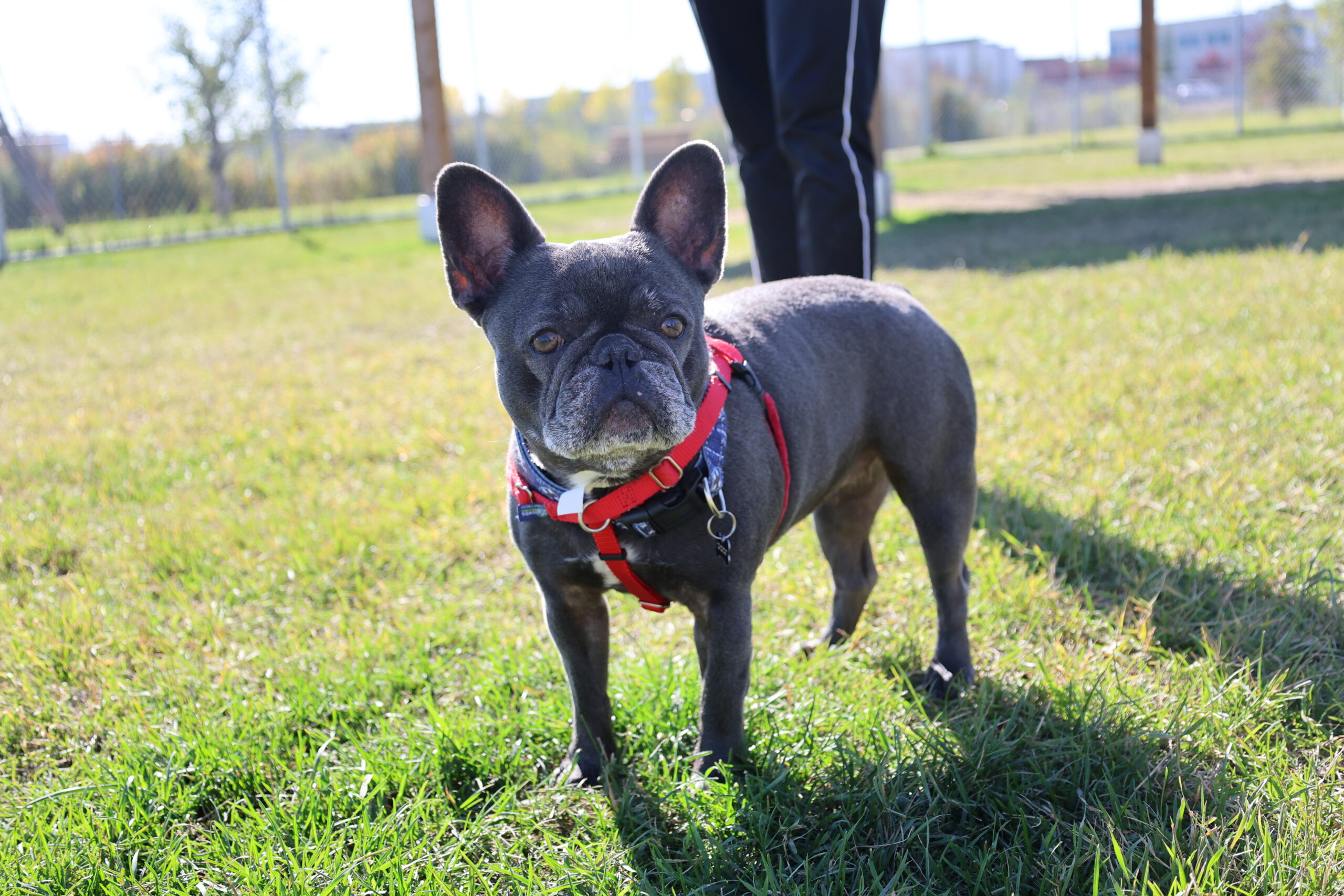
Temporary image placeholder for Muffin’s story

When Excitement Turned to Worry

But excitement for this new dog quickly moved into panic. The cost of care, even for basic care, was more than expected. But the idea of losing Muffin over this was even more frightening.

It seemed silly. How attached could someone get in just 24 hours? Yet somehow, a bond had already formed. Both felt as though they needed the other, not just wanted them.

What could they do?

A question was asked: could the spay be skipped? There were no other intact animals in the home, and they could prevent a pregnancy easily enough.

The vet smiled and said this was a reasonable question. But, the vet explained, spaying and neutering isn’t only about preventing an unexpected litter. It’s also about helping pets live healthier, more comfortable lives. It can reduce serious health risks, support more stable behaviours, and spare animals from navigating a whirlwind of hormone-driven urges they can’t possibly understand.

More Than Preventing a Litter

The vet took their time, patiently walking through the benefits. Spaying can reduce the risk of certain cancers and prevent dangerous infections like pyometra. Spaying and neutering can also help reduce behaviours such as roaming, escaping, and urine marking.

The benefits have social impacts too. Fewer unplanned litters means fewer animals entering already-stretched shelters and more pets finding, and keeping, the homes they deserve.


The challenge wasn’t whether to spay Muffin. It was how to make it possible.

By the end of the conversation, the decision felt clear. Muffin deserved this care.

So, the question returned: what could they do if cost was the barrier?

Making Essential Care Possible

The vet smiled again and said not to worry. Services exist for moments exactly like this, helping ensure necessary care is available to everyone while protecting the beautiful bond that has already been created.

They handed over a card: Calgary Humane Society’s No-Cost Spay/Neuter Program.

The application would take only a few minutes, and within days, Muffin could be scheduled for surgery. Suddenly, what had felt impossible felt achievable.

Muffin wouldn’t lose her family over the cost of a procedure. And her family wouldn’t lose Muffin.

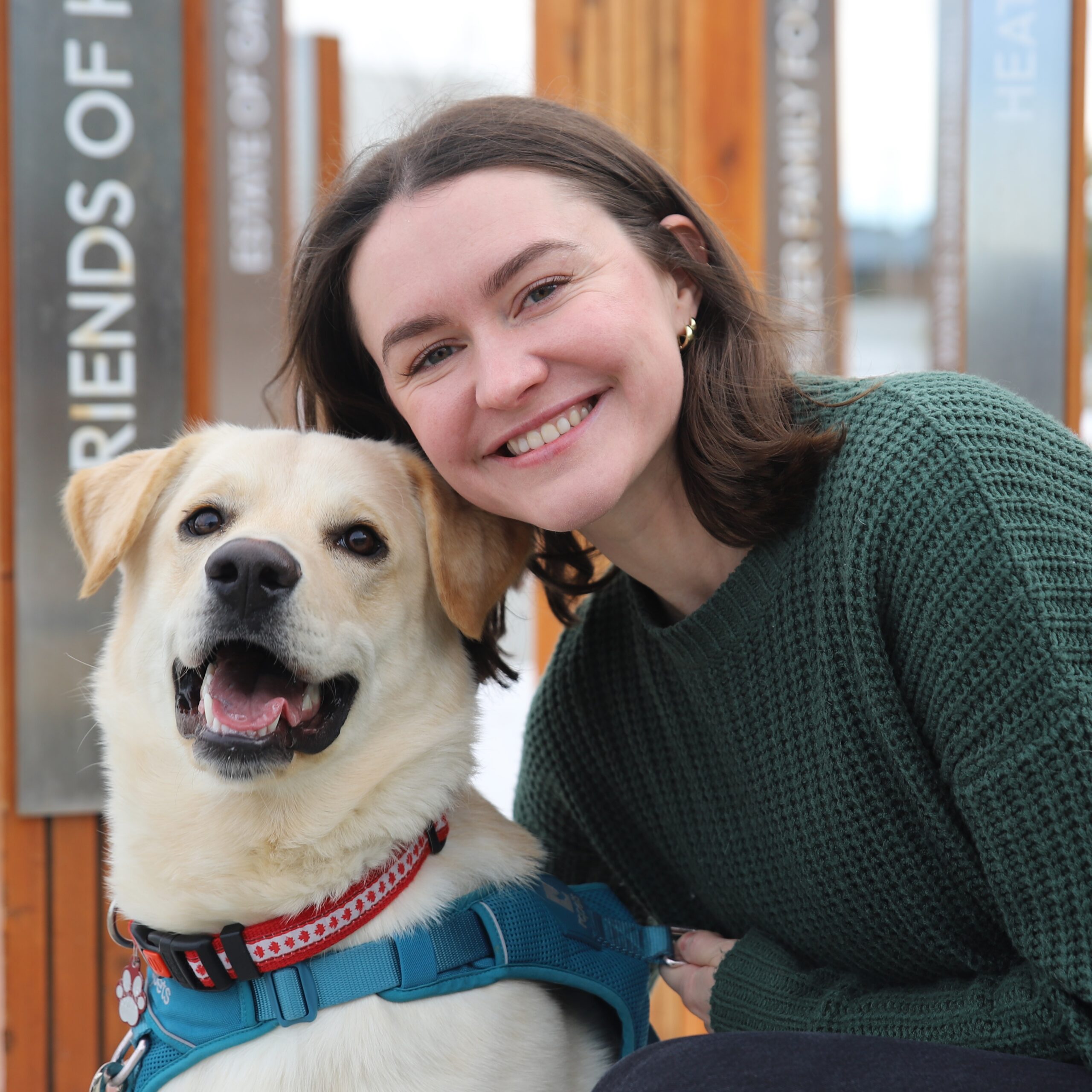
Photo of Sally

Written by

Sally Johnston

Director of Community Services & Pathway Planning, Calgary Humane Society

Pet-Inclusive Housing

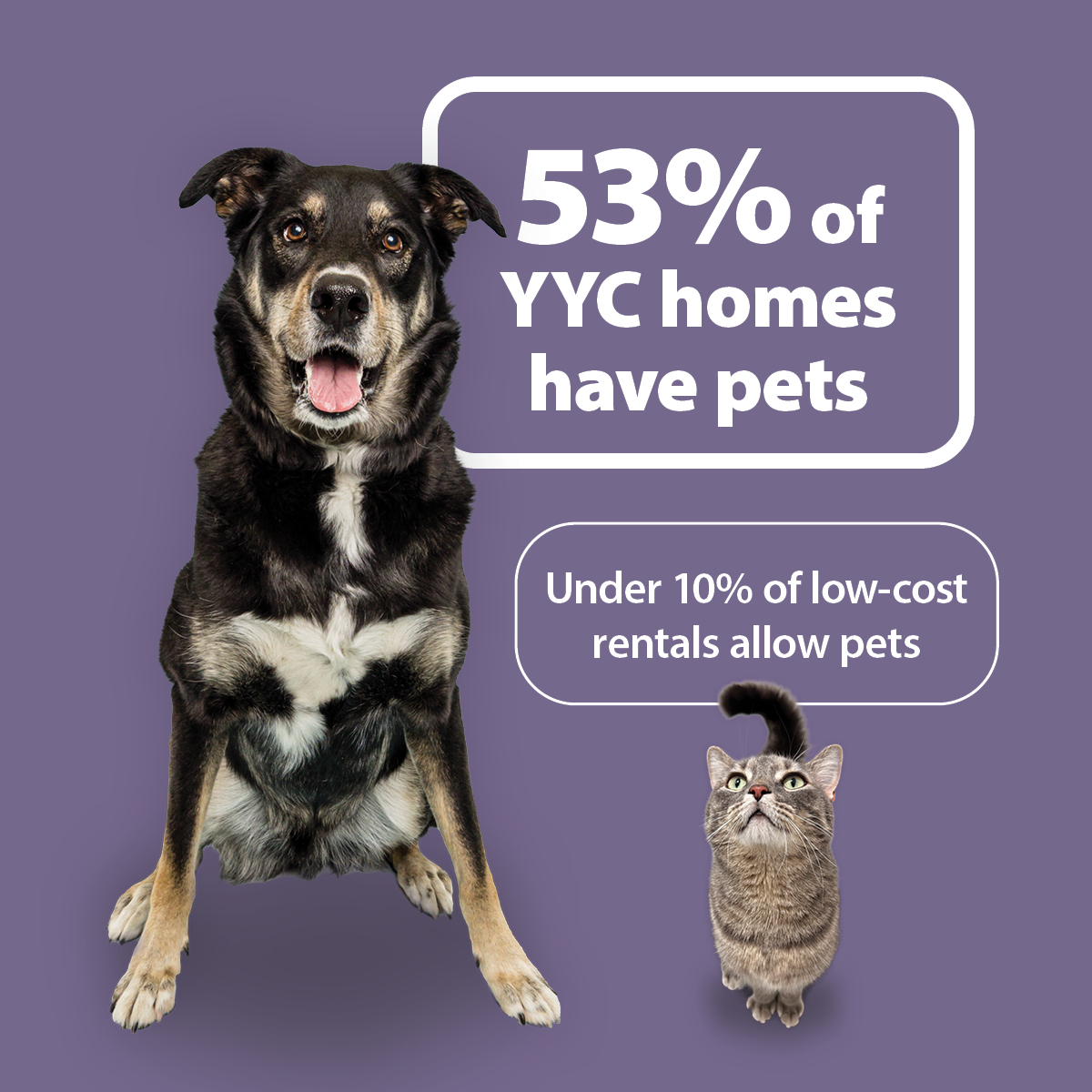
Every year, Calgary Humane Society welcomes hundreds of animals whose families never wanted to say goodbye.

While there are many reasons animals come through our doors, one of the most preventable is housing.

For hundreds of families each year, finding a place to live that accepts pets becomes an impossible challenge. Faced with eviction, rising rents, or a landlord who won’t allow animals, many people are forced into an unimaginable position: surrendering a beloved companion simply because they cannot find a home where they can stay together.

These are not stories of people who don’t love their pets. They are stories of people who have run out of options.

At Calgary Humane Society, we see these situations firsthand. They are heartbreaking for families, stressful for animals, and a reminder that animal welfare and human well-being are deeply connected.

Building a More Pet-Inclusive Calgary

Recognizing that this was a growing community issue, we knew meaningful change would require collaboration. But partnerships like this don’t happen overnight.

Two years before this initiative officially launched, we began investing in a relationship with the City of Calgary. It started with a simple but impactful conversation. At our signature Dog Jog event, we had the opportunity to share a brief elevator pitch with Calgary’s Mayor about the challenges families face in finding pet-inclusive housing. That conversation planted the seed for what would become a much larger collaboration.

Calgary Humane Society Dog Jog event

Over the following two years, we continued to build that relationship, sharing Calgary Humane Society’s frontline experiences, data, and vision for a more pet-inclusive city. Together, we recognized that this was not simply an animal welfare issue—it was a housing issue, a social issue, and a community issue.

For me, this project has been one of the most meaningful initiatives I’ve had the privilege to work on. It represents the kind of upstream, collaborative work that can prevent crises before they happen and keep more families together.

Introducing the Pet-Inclusive Housing Initiative

Today, we’re proud to launch our Pet-Inclusive Housing Initiative in partnership with the City of Calgary.

Calgary Humane Society Pet-Inclusive Housing Initiative

This initiative is the result of months of research, collaboration, and planning. Working alongside researchers from the University of Calgary, we sought to better understand the barriers facing pet owners and the concerns facing landlords. The findings confirmed what we’ve long observed through our frontline work: the lack of pet-inclusive housing is a growing issue in Calgary, but it is one that can be addressed through practical, collaborative solutions.

More than 60 per cent of renters surveyed have been denied housing because of a pet.

Our research found that more than 60 per cent of renters have been denied housing because of a pet. We also heard from people who stayed in unsafe living situations because they couldn’t find housing that would allow them to keep their animals. At the same time, landlords told us they are not necessarily opposed to pets; they are concerned about uncertainty, including potential property damage, noise, insurance, and liability.

That distinction is important.

If the concern is risk, then the solution is support.

Rather than asking landlords to simply “allow pets,” this initiative provides practical resources that make pet-inclusive housing easier to manage. Through landlord toolkits, tenant resources, behaviour support, educational materials, and partnerships across the housing sector, we are working to reduce barriers for everyone involved.

Supporting Both Ends of the Leash

This initiative also reflects a broader evolution in animal welfare.

For more than 100 years, Calgary Humane Society has cared for animals in need. Today, we know that protecting animals also means supporting the people who care for them. Preventing surrender is just as important as responding to it, and often the best way to help an animal is to help the family trying desperately to keep them.

No single organization can solve the housing crisis. But together with landlords, housing providers, government, social service organizations, and our community, we can create more opportunities for people and pets to stay together.

Every pet-friendly home has the potential to keep a family together while leaving space in our shelter for the animals who truly have nowhere else to go—those who have been abandoned, neglected, abused, or are in immediate need of protection.

That is what this initiative is about. Not simply changing housing policies, but changing outcomes for people, pets, and our community.

Because no one should have to choose between a safe place to live and the animal they love.

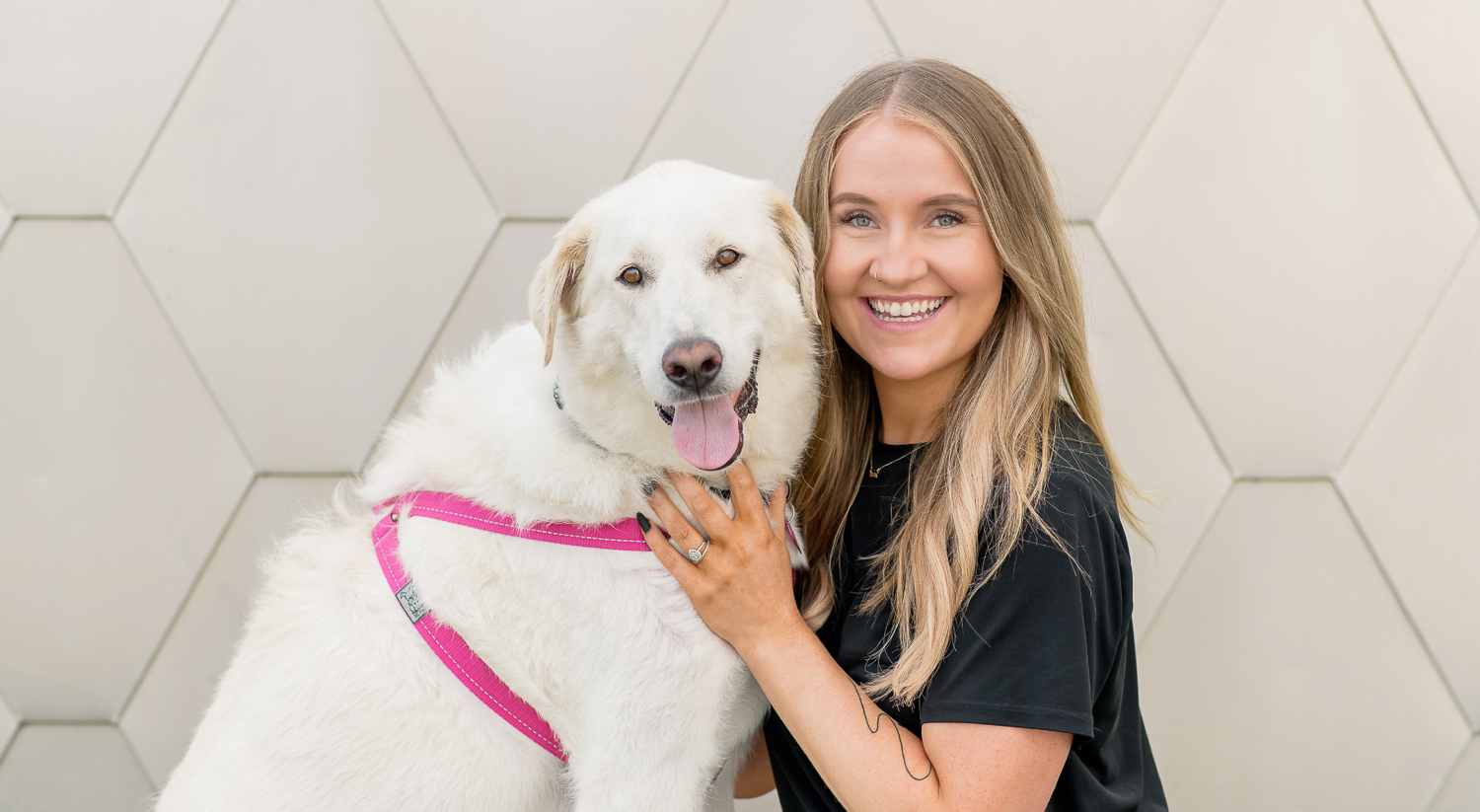
Photo of Anna-Lee and her dog Riley

Written by

Anna-Lee Fitzsimmons

Vice Executive Director & Director of Public Relations, Calgary Humane Society

Behind the Scenes – Fostering Animals at Calgary Humane

From fridge-opening dogs to letters written between foster parents and pet owners, many wonderful and unexpected experiences come with fostering an animal.

When you join Calgary Humane Society’s foster program, you never know which animal will come into your life—or how significant your impact will be.

Our foster program allows us to continue welcoming animals who need help. Foster families care for approximately one-third of the animals in our care while also helping prevent the stress that some animals experience in a shelter environment.

For dogs like Sadie-Lady, foster care can be an essential step on the journey toward finding a home.

Fostering gives animals the space to decompress, allows us to understand who they are outside the shelter and helps potential adopters see the qualities that make each animal special.

Sadie-Lady spent more than four months in our care after being transferred to Calgary Humane Society from Manitoba, where she had already spent over a year in a shelter.

Sadie-Lady relaxing or playing in her foster home

Sadie-Lady was able to decompress and show her personality while living in foster care.

Understanding her needs and personality was essential to guiding her toward a permanent home. While staying in the shelter, Sadie-Lady showed reactivity toward other dogs and sensitivity to certain environmental triggers. As her stress continued to increase, it became clear that moving into foster care and becoming part of our Adopt From Foster program was the best path forward.

In her foster homes, Sadie-Lady was able to decompress and feel safe. Her foster families discovered a dog who was full of joy, incredibly playful and deeply affectionate.

Because they spent time with her in a home environment, her foster families could share much more about her personality with potential adopters. They supported her as she adjusted, helped her work through situations that triggered her reactivity and showed the world the incredible dog Sadie-Lady truly was.

Most importantly, Sadie-Lady was able to feel safe and happy while she waited for her person to find her.

Fostering benefits people, too.

The bonds that are formed, the companionship foster families receive and the unexpected fun that comes with welcoming a new animal can make each foster experience uniquely rewarding.

Calgary Humane Society staff members have had their own memorable foster experiences.

Chloe Collins, a Foster Facilitator, is currently caring for a senior foster dog with a particularly unusual skill: opening the refrigerator.

When Collins and her partner stepped out for a quick errand, they opened their camera app to check on the dogs at home. They watched as their foster dog used her nose to pop open the refrigerator door—and then simply sat there, looking inside without touching anything.

Their resident dog, however, was less restrained and used the opportunity to help themselves to some Swiss cheese and back bacon.

Some foster animals cannot resist sharing their unusual talents with us. Others find meaningful ways to bring people together.

More than animal care

Foster families can provide reassurance and connection not only to the animals in their homes, but also to the people who love them.

Alex Olley, Calgary Humane Society’s Animal Flow Specialist, remembers a foster parent who cared for dogs through our emergency boarding program.

The foster parent and the dogs’ owner began communicating through letters, sharing stories and updates about how the animals were doing. One of the letters the foster parent received had been written directly to the dogs. In response, the foster parent wrote back from the dogs’ perspective.

During an incredibly difficult time, that foster parent provided support not only to the animals, but to their owner as well.

It is remarkable to see the bonds that form between foster parents and foster animals. Foster families help us learn more about animals so we can guide potential adopters, provide updates to owners who cannot be with their pets and occasionally discover that their temporary guest has become their permanent companion—a foster find.

If you have been thinking about becoming a foster parent, we would be honoured to guide you through the journey—and we cannot wait to hear the stories that come from it.

Rethinking “Cute”

Scroll through social media or wander into a pet retailer, and it’s easy to be charmed by a sugar glider peeking out of a pouch, a hedgehog curled into a tiny ball, or a rabbit small enough to fit in your hands. These animals are often marketed as “pocket pets” and believed to be low-maintenance, adorable companions that fit neatly into busy lives. But behind the appeal lies a much more complicated and often troubling reality.

The exotic pet trade involves the buying and selling of wild or non-domesticated animals for private ownership. This includes everything from reptiles and birds to small mammals like ferrets, chinchillas, and sugar gliders. While some of these animals are bred in captivity, many are still sourced from the wild, contributing to significant ecological and welfare concerns.

Even when animals are bred for the pet trade, the conditions they’re kept in and the assumptions made about their care can lead to serious harm.

Unlike dogs and cats, most exotic animals have not been domesticated over generations to live alongside humans. Their needs are complex, specific, and often misunderstood.

In Canada, we instinctively understand that wild animals belong in the wild. Few would ever consider bringing a river otter into their home as a pet, we recognize that, no matter how small or seemingly manageable, it is not a companion animal. Similarly, in Australia, it can be illegal to own sugar gliders as pets because they are protected as native wildlife. And yet, in North America, sugar gliders are often marketed and sold as suitable household companions as river otters are in Asia. This contrast highlights how perception, not biology, often shapes what we consider an “acceptable” pet.

Pocket pets are frequently perceived as “easy” or “starter” pets, but this couldn’t be further from the truth. Many require:

  • Specialized diets that can be difficult to replicate
  • Large or enriched habitats (despite their small size)
  • Regular supervised time spent outside of their enclosure for enhanced enrichment
  • Nocturnal care routines that don’t align with human schedules
  • Social structures, as some species become distressed or depressed when kept alone

When these needs aren’t met, animals can suffer from malnutrition, stress, illness, and behavioral issues. Unfortunately, by the time many owners realize they’re in over their heads, the animal is already suffering.

Because pocket pets are small and often sold at relatively low prices, they are more likely to be purchased on impulse. A child begs for a hamster. A family picks up a rabbit around Easter. A couple buys a pair of sugar gliders after seeing a viral video.

What’s often missing is a full understanding of the long-term commitment involved. Many of these animals live for years, sometimes over a decade, and require consistent, knowledgeable care throughout their lives.

This leads to a troubling cycle: animals are purchased without preparation, surrendered when they become inconvenient, and shelters and rescues are left to pick up the pieces.

For species still taken from the wild, the exotic pet trade can have devastating environmental consequences. Removing animals from their natural habitats disrupts ecosystems and can push already vulnerable species closer to extinction. Additionally, the process of capturing, transporting, and selling these animals is often stressful and inhumane. Many do not survive the journey.

Exotic animals can also pose risks to human health. Some carry zoonotic diseases (those that can be transmitted between animals and humans), and others may bite or scratch when stressed or handled improperly.

This isn’t a reflection of the animals themselves; it’s a sign that they are being placed in environments that don’t meet their needs.

Addressing the issues within the exotic pet trade and pocket pet culture requires both awareness and action.

For individuals:

  • Ensure you understand the species’ husbandry and behavioural requirements thoroughly by researching from reputable, evidence-based sources before bringing any animal into your home
  • Consider adopting rather than purchasing, especially from shelters or rescues
  • Be honest about your capacity and resources to meet an animal’s long-term needs

For communities:

  • Support humane education initiatives that teach responsible pet ownership
  • Advocate for stronger regulations around the sale and breeding of exotic animals
  • Encourage pet stores and online platforms to prioritize animal welfare over profit

There’s nothing wrong with appreciating the beauty and uniqueness of exotic animals. But appreciation doesn’t have to mean ownership. Sometimes, the most compassionate choice we can make is to admire these animals from a distance, or support efforts that protect them in their natural habitats.

Because when we look beyond the “cute,” we begin to see the responsibility and the reality behind exotic animal ownership.

If Dogs Could Talk… You’d Already Know What They’re Saying

Learn How to Talk to Your Dog (Without Saying a Word)

Have you ever wished you could talk to your dog? Really talk — hear their thoughts, their feelings, and what they actually think of that new puppy next door.

Dogs Are Already Talking — We Just Have to Listen

The truth is that dogs are talking to us all the time. They just aren’t using oral communication (aside from the occasional “bark bark!”). Instead, they communicate through their bodies, their faces, and how they move through the world. The challenge isn’t that we can’t talk to our dogs; it’s that most of us were never taught how to listen.

What “Behaviour” Is Really Telling You

That time your dog turned their head away? They weren’t suddenly distracted by a ghost. That moment they briefly froze on a walk? They’re not lost in thought. Even a jump or a bark isn’t automatically “bad” or “stubborn” behaviour. These are all ways dogs tell us how they’re feeling in the moment: unsure, overwhelmed, excited, cautious, or just needing a little space. Understanding canine body language is the foundation of behaviour, training, and strong relationships, and it’s one of the most powerful tools animal guardians can learn.

How Dogs Communicate With Their Bodies

Dogs speak with their bodies. They communicate through posture, facial expressions, movement, and how they use space. Is your dog loose and wiggly, or stiff and tight? Are they leaning forward with curiosity or shifting their weight back to increase distance? Is their body curved and relaxed, or straight and braced like they’re preparing for something important?

Dog body posture example

Facial Expressions Matter Too

Their faces are just as talkative. Soft eyes, hard stares, pinned-back ears, lip licking, blinking, and even yawning all tell a story. So do choices like slowing down, freezing, approaching, or avoiding. None of this is random. It’s meaningful, moment-by-moment communication.

The Signals We Miss First

Many of the most important signals are subtle and easy to miss. A quick head turn, a pause on a walk, a sudden interest in sniffing the ground: these are often early signs that a dog is uncomfortable or unsure. When those signals go unnoticed, dogs may feel the need to “speak louder” through barking, lunging, or other behaviours that are often labeled as problems… when really, they were just the final chapter of a story that started much earlier.

Communication Is a Two-Way Conversation

But listening is only half the conversation. Learning to read your dog’s body language is a huge step, but nobody enjoys a one-way conversation, including your dog. “Talking to your dog” isn’t about issuing more commands or speaking louder (they already hear you, promise). It’s about how we respond to what they’re telling us. If your dog is overwhelmed, creating space can be far more helpful than pushing through. If they’re overexcited, slowing things down can help them regulate. If they’re unsure, forcing interaction can increase fear, while patience and choice build confidence. When we adjust our behaviour, dogs don’t have to escalate theirs. This is the heart of humane, effective behaviour support: meeting dogs where they are, not where we wish they’d be.

Dog facial expression example

Why Body Language Matters at Every Age

Communication skills aren’t something dogs grow out of; they’re skills they grow into. That’s why understanding body language matters from puppyhood through adolescence and into adulthood. As dogs develop, their signals change, their emotional range expands, and their communication becomes more nuanced, just like ours.

Welcome to Dog Customer Support

If this is all sounding familiar—active listening, clear communication, adjusting your approach to support someone else—congratulations. You’ve been promoted to fulltime dog customer support. No tickets. No hold music. Just very clear signals, if you know how to read them.

Learn These Skills Together

Learning to recognize and respond to your dog’s body language takes practice, curiosity, and sometimes a second set of knowledgeable eyes. If you’d like to deepen your understanding, Calgary Humane Society classes are a great way to learn more about canine communication and behaviour—together.

The Impact of Second Chances: Patches’ Story

Giving animals a second chance offers the community a unique opportunity to support animal welfare, build meaningful human-animal bonds, and create a more humane world. Many animals are often overlooked for a variety of reasons, causing them to spend extended periods of time in shelters waiting for a loving home. By recognizing their worth and opening our hearts, we not only change their lives, but also enrich our own.

This was certainly the case for one of our cats in need of a second chance, Patches.

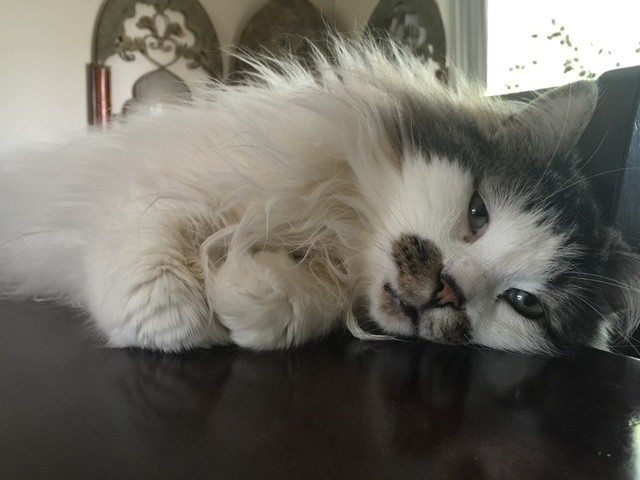
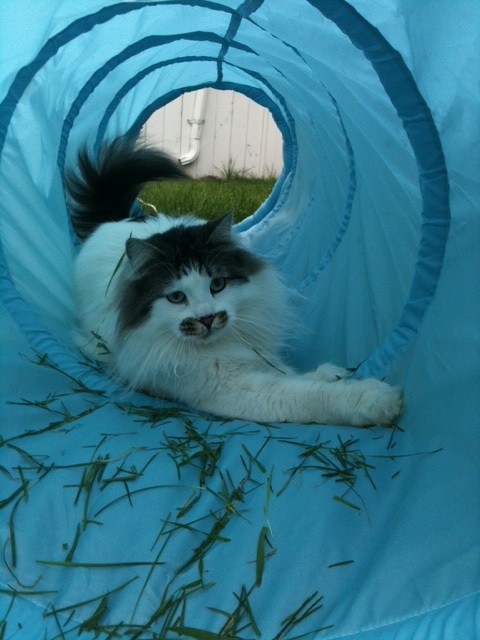
Patches was a domestic longhaired, white and brown tabby feline friend who was surrendered to Calgary Humane Society as a young cat for back in the later months of 2008. True to his name, he had large brown patches—one covering his head and ears, another heart-shaped patch on his side, and one under his nose resembling a moustache. These unique markings were paired with the fluffiest white coat and brightest green eyes.

After being brought to Calgary Humane Society, Patches immediately underwent routine medical care, ensuring he was in good health and that his vaccines were up-to-date. After twelve days, Patches was moved to the adoptions floor and ready to find his forever home.

Despite his captivating appearance and charming personality, Patches remained at the shelter longer than anyone expected. Still, Patches waited patiently for his future family and hope was not lost.

On Sunday, September 28th, 2008, two very special people came into the shelter with the intention of adopting a cat.


Patches was not their first pick. One of the adopters felt certain that, given his striking looks and friendly nature, Patches had no shortage of interest and would be adopted soon. Their priority was to give a second chance to a cat who might otherwise be overlooked. But when the CHS employee informed them that Patches was that cat—the one waiting, the one needing a second chance—they knew. He was the one.

And just like that, Patches was welcomed into his forever home.

They decided to keep his name but also opted to use nicknames: Patchy McGee, Patchy, Patches O’Hooughligan—the list seemed endless. Patches spent the next seventeen years as an incredible companion. In his home, Patches grew to be the most loving and affectionate friend, getting along with other animals and helping his family through the loss of two cats and two dogs. He came when called, purred when brushed, and loved with his whole heart. Patches was always the first to welcome guests into his home the same way that he once was (though this would end with him convincing them to turn the bathtub tap on for him to drink from). Even people who didn’t like cats were enchanted by him and often found themselves wanting to adopt cats of their own. If you loved Patches, Patches most certainly loved you.

As years passed, Patches’ family began to notice differences with his health. They began attending routine check-ups with his vet, where he received regular senior wellness panels, treatment for IBS, and arthritis injections in his later years. Throughout all of this, Patches personality never changed and he remained the charming friend he was when he was first brought home.

After seventeen years of living his second chance, his family knew it was time. On June 11th, 2025, Patches crossed the rainbow bridge. Patches remained his loving and beautiful self right until the end.

Patches was an animal in need who was given the opportunity to live a second chance, and in return, he gave seventeen years of love, comfort, and unwavering companionship. Patches will be deeply missed, but his memory will forever remain a testament that giving animals in need a second chance helps create a more humane world.

Giving an animal in need a second chance has great impact on not only the animal, but also the human. Much like Patches, giving an animal a second chance can result in the most rewarding reciprocal bond. Giving second chances provides the opportunity for humans to create a lifelong bond with animals and communities to create a more humane world.

From Struggling to Snuggling: Kekoa’s Journey of Hope

Kekoa’s First Days

When 10-month-old Kekoa arrived at Calgary Humane Society as a stray, the fear in his eyes said it all. Shut down and frozen in place, he spent his first days curled up on his bed, avoiding eye contact and only eating in the safety of darkness. Kekoa wasn’t just shy—he was paralyzed by fear. Our team was deeply concerned about his quality of life.

The Behaviour Team Steps In

That’s where our Behaviour Team stepped in—and they never looked back.

From day one, the Behaviour Team took the lead on Kekoa’s recovery. With deep expertise and unshakable commitment, they crafted a thoughtfully curated, personalized training plan to meet Kekoa exactly where he was: scared, shut down and unsure of the world around him.

Their work was rooted in evidence-based, force-free training methodologies designed not to demand compliance, but to gently guide animals toward success on their own terms.

For Kekoa, the key to opening that door was food. Using positive reinforcement techniques and a reward marker that made sense to him, the team helped Kekoa understand that humans weren’t something to fear—they were something to trust.

Setbacks and Second Chances

His first step was simply tolerating the presence of people. Then, slowly, he became brave enough to eat from a hand. Just as progress began to peek through, Kekoa developed kennel cough, setting him back significantly.

But the Behaviour Team didn’t stop believing in him.

They doubled down—revising his plan, collaborating across departments and advocating fiercely for Kekoa’s continued support. Working closely with our Foster Team, they identified an experienced foster parent and created a transition plan that prioritized safety, predictability and trust-building.

Foster Care Begins

Just hours into foster care, Kekoa was wagging his tail and soaking up the sun. With daily support and guidance from the Behaviour Team, his foster dad followed the plan: safe spaces, slow introductions, consistent routines and building life skills like house training and leash walking—all at Kekoa’s own pace.

April 4, 2025 — “He just laughed at me while I tried to be gentle getting him in. I got a tail wag as I was settling him in—now just enjoying the sunshine.”

— Foster Update

“Hi shelter family, it is I, Kekoa. I broke out of my safe space twice—wroof!”

— Foster Update

A New Pup Emerges

Kekoa’s personality began to shine. He stole socks. Snuggled into pillows. Explored the world from the couch—always with a paw gently resting in his foster dad’s hand.

With every positive experience, his fear melted further away. The Behaviour Team remained by his side throughout, monitoring his progress, adjusting training goals and providing ongoing coaching to his foster parent. They were Kekoa’s constant champions.

April 7, 2025 — “He certainly likes his snuggles. We’re still working on walking around the house without him being nervous—but we are leaps and bounds ahead of where we were just a couple days ago.”

By April 11, Kekoa was confidently exploring his home, bonding deeply with his foster dad and even beginning to greet new people.

April 11, 2025 — “Every day feels like a novel. He’s a happy, regular puppy these days. There’s no anxiety when cuddling or walking around him anymore. We’re working on leash skills and he’s starting to socialize with new people. His development continues to move at rocket speed.”

The Ongoing Commitment

Kekoa’s transformation is a testament to the incredible work of the Behaviour Department—not just during his early days at the shelter, but throughout his foster placement and beyond.

Because for the Behaviour Team, support doesn’t end at adoption.

They remain part of each animal’s journey by offering:

  • Post-adoption behaviour support for all CHS-adopted animals
  • Group training classes for dogs of all personalities and skill levels
  • Personalized private consultations for specific behavioural concerns
  • Ongoing connection through behaviour resources, the CHS dog park and continued education opportunities

Their approach is simple but powerful: meet each dog where they are. Celebrate their progress. Champion their potential. And stay beside them for as long as they need.

Because dogs like Kekoa aren’t just “tough cases.” They’re survivors. And with the right team, they don’t just survive—they thrive.

We can’t wait to see what’s next for Kekoa—and we’ll be right there cheering him on.


How You Can Help

Want to be part of stories like Kekoa’s?

Our Behaviour Team is behind every success story, but they can’t do it alone. If you’ve got a quiet home, a little patience and a lot of love to give, become a foster and help animals like Kekoa heal.

Visit calgaryhumane.ca/foster to learn more.

Cold Weather Response: Animal Protection in Calgary

It is Monday morning. A polar vortex has descended upon Calgary over the weekend and the drive in to work on ice covered roads brings an ominous expectation of things to come. Calgary weather can be a wild ride. It is not abnormal to see a 40 degree swing in temperatures in a matter of days. Sure enough, this -33 degree Celcius day strikes early and often. We receive notification that Calgary Police have seized a dog overnight, having been left out in the cold without any protection from the elements. A concerned citizen is calling our call centre to report 2 dogs in the yard for a lengthy period while another complainant holds to report roaming cats seeking warmth in the engines of vehicles. A Landlord is emailing in requesting removal of cats from an unheated garage they were renting to a now evicted tenant. When it rains, it pours, or rather, when it snows, it blizzards. CHS Animal Protection Peace Officers, themselves layered to battle the elements get the enforcement trucks started and warmed up for what will inevitably be a busy day. Arrangements are made to retrieve the CPS seized dog from the emergency veterinary clinic and the Peace Officers are out to the field to attend calls on a triaged basis. Shelter calls are an emergency today and will take top priority, but that does not mean abuse, abandonment and medical neglect calls slow down.  

This is just the tip of the iceberg. 15 minutes of play-by-play, narrating the start of a new week of protecting Calgary’s animals. Pet owners usually exercise common sense in the most extreme weather but on the basis of reports, that rule of thumb does not seem to be holding on this day. While animal protection enforcement is usually very nuanced and ‘grey’, it doesn’t get any more black and white than a weather event like this. If an animal is deprived of adequate shelter or protection from injurious cold and the owner is either not present or not willing to take the dog inside, the animal will be seized, at least temporarily, until an investigation is completed, the animal is examined by a veterinarian, treated for any medically necessary concerns and remediation of the environmental concern is complete. In this case that remediation would be the installation of an insulated/heated doghouse or a commitment to keep the dog indoors, save for bathroom breaks and short exercise sessions. 

Education is a foundational element of animal protection, so while the field officers are bouncing around the city, ensuring animals in distress receive appropriate intervention, we take opportunity to utilize the media to our advantage in hopes of preventing some animal suffering by making legal obligations and consequences clear as possible. A live segment on the noon news and a smattering of camera, phone and e-mail interviews for other outlets ensures a wide net is cast. In many cases, in the face of a compliant and cooperative animal owner, Peace Officers will opt for education over enforcement, ensuring the animals’ needs are met. If we can change behavior without having to remove an animal from its home and ensure its welfare, we will.  

On the other end of the spectrum, where the offense is egregious, repeated or causing significant injury, charges under the Animal Protection Act or Criminal Code may be warranted to deter future offense and prohibit animal ownership. Maximum penalties for animal cruelty in general (and to be clear, depriving an animal of adequate shelter and protection from injurious cold is exactly that) are up to 5 years incarceration, a $20,000 fine and a lifetime animal prohibition order.  


Brad Nichols, Director of Enforcement, Vice Executive Director

Fostering Hope: The Holiday Difference at Calgary Humane Society

Why foster for the Holidays? 

The holiday season is a time for togetherness, joy, and giving. It’s also a time when many of us reflect on the things that matter most—family, love, and kindness. For Calgary Humane Society, this season offers a unique opportunity to not only celebrate these values but to also spread them to the animals in our care. Every year, we work hard to send as many animals as possible into foster homes during the holidays. This not only helps the animals but also allows our dedicated staff and foster parents to enjoy the holidays with their own families, knowing that the animals are in safe, loving hands. 


A Busy Time for the Shelter 

The holidays are a busy time for animal shelters. While many of us are making travel plans, preparing big meals, or decorating our homes, shelters like Calgary Humane Society continue to operate, caring for vulnerable animals in need. However, the shelter is closed to the public on December 24, 25, 26th, and January 1 so staff can take a much-needed break. This brief pause is crucial for everyone who works so hard year-round to care for animals in need. But as with any busy time of year, the shelter can quickly fill up, and we want to ensure the animals continue to receive the care and attention they deserve. 

That’s where fostering comes in. 


The Gift of a Temporary Home 

Fostering animals during the holidays not only reduces the number of animals in the shelter but also gives these animals the chance to experience what every pet deserves—a warm, loving home. It’s the best gift we can give to an animal during the holiday season. It’s also an incredible opportunity for people to make a tangible difference in the lives of animals in need. By offering a temporary home, foster parents provide a safe, quiet, and less stressful environment for these animals, far away from the hustle and bustle of the shelter.  

Animals in the shelter, particularly cats, dogs, and small critters, can be stressed by the noise, the constant movement, and the unfamiliar faces. Foster homes provide these animals with the space and time to relax, decompress, and truly enjoy their time with humans. Whether it’s a cozy corner by the fireplace or a warm lap to snuggle in, the gift of foster care over the holidays allows these animals to experience peace, comfort, and the joy of human companionship. 


A Win-Win Situation 

Fostering is a win-win situation for everyone involved. For Calgary Humane Society, it means we can reduce the number of animals in the shelter, making it easier for our staff to care for those who remain. It also gives our team the ability to take a well-deserved break during the holiday season. For foster families, it’s a chance to make a big difference with relatively little commitment—just a few days or weeks in a loving home can have a huge impact on an animal’s wellbeing. 

Most importantly, fostering gives animals the opportunity to get out of the shelter and into a home where they are treated as part of the family. This break from the shelter environment allows many animals to become more comfortable with human interaction, which can increase their chances of being adopted in the future. 


115 Animals Fostered in December 2023 

In December 2023, the Calgary Humane Society sent 115 animals into foster homes, with 68 of them placed during the week leading up to the holidays, from December 17th to 23rd. This included a diverse range of animals, from dogs and cats to birds, rabbits, guinea pigs, and even a snake. During this week alone, we sent out: 

6 birds 

23 cats 

33 dogs 

1 guinea pig 

4 rabbits 

1 snake 

These numbers reflect the generosity of our foster parents, who help create space in the shelter and give these animals a safe, loving environment to thrive in. While the shelter is closed during the holidays, these foster animals can rest easy in homes that care for them, without the stress of being in an overcrowded environment. It’s truly a holiday gift for them, one that sets the tone for a bright future ahead. 


The Joy of Fostering 

For many foster parents, participating in the Home for the Holidays program is one of the highlights of their year. The joy of providing a safe, loving home to a pet during the busy holiday season is deeply rewarding. The excitement among our foster parents was so great that we began receiving messages about participating in the program before we had even advertised it! As one foster parent shares, “I would be happy to participate in the Home for the Holidays program again this year. It’s such a fulfilling experience to help an animal find some peace during the holidays.” Another foster parent adds, “We would love to be a part of this program. The opportunity to make a difference for an animal in need is something we look forward to every year.” 

The excitement for many is palpable, with others saying, “I’m so excited to be a part of this,” and “I would love to take in a cat or kitten for the holidays!” For many, it’s about offering a temporary haven for animals who may be stressed in the shelter, providing them with a quiet, loving environment where they can feel safe. One foster parent reflects, “Last year, we had a wonderful experience fostering for Home for the Holidays, and we would love to do it again this year. It’s such a wonderful program that allows us to give back during the holiday season.” For these foster parents, fostering is not just about caring for an animal—it’s about making a real difference in their lives, giving them the comfort and love they deserve during a time when it’s needed most. 

One of our most dedicated dog foster parents, Deb, exemplifies the deep connection many foster parents feel with the animals they care for. Deb first joined the Home for the Holidays program as a temporary foster parent. She was so moved by the experience of fostering during the holidays that she transitioned to regular fostering, offering her home to animals in need throughout the year. Her journey shows how the Home for the Holidays program can serve as an introduction to fostering, with many foster parents finding it so rewarding that they continue to provide love and care long after the holidays are over. 


How You Can Help 

If you’re considering fostering over the holidays, we’d love to hear from you! Fostering is an incredibly rewarding experience, and it’s easier than you think to get involved. Whether you’re a first-time foster or a seasoned pro, we provide all the support and supplies you’ll need to ensure a successful foster experience. Plus, our team is always here to guide you through the process and answer any questions you may have. 

The holiday season is a time for kindness and compassion, and by fostering an animal, you can make a world of difference. Whether you’re taking in a dog, cat, rabbit, or even a bird, you’re helping give that animal the gift of a peaceful, loving home—at a time when they need it most. 

So, this holiday season, consider becoming a foster parent for an animal in need. It’s the best gift you can give—not only to the animal but also to yourself, knowing that you’ve played a part in giving an animal the love and care they deserve. Together, we can make the holidays brighter for everyone! 


Suzanne Fletcher, Admissions and Foster Manager

 

Postal Strike Impact

When news of a looming postal strike appeared in the media, the sentiment of my peers in the for-profit and private sectors was one of indifference.  A feeling that Canada Post was an archaic and dying service in today’s world of email, e-transfers and Amazon delivery was expressed.  They truly believe they will not feel the impact and business will continue as normal.  They were not worried.   

Where the impact will be felt is with not-for-profit organizations.  The organizations who support those who are in the greatest of need and the most vulnerable – individuals fleeing from violence, seniors, those struggling with housing and food insecurity in a harsh winter, the list is endless.  For Calgary Humane Society, it is the thousands of animals we admit every single year suffering from abuse, neglect, cruelty and abandonment looking for a new home and a second chance.  This is where the impact will be felt.   

The holiday season, which kicks off with Giving Tuesday, is the most critically important time of year for most philanthropic organizations – Calgary Humane Society is no exception.  Over 45% of our total fundraising revenue comes in over the final two months of the year.  We often can predict the success of our fundraising campaigns by the size of the mail bins being delivered daily from Canada Post in response to our Direct Mail pieces sent out in advance of the holiday season.   

If the postal strike should evolve into a long term strike, this could significantly impact the program and services not-for-profits are able to deliver – the very organizations that pick up where government programs and subsidies end. All of us at Calgary Humane Society, and in the not-for-profit sector as a whole, are holding our breath and quickly adapting our strategies to minimize the impact this strike could have on our year-end financial results.  We are all hoping for a quick resolution to the dispute, but as the days turn into weeks, we are becoming increasingly concerned.  There is so much more at stake than letters being delivered to the North Pole for Santa.  

The need in our community is great this year.  With the falling economy, rising inflation, the housing crisis, along with political instability that seems to hinder any progress towards positive change, not-for-profit organizations need the support of the community more than ever.  At Calgary Humane Society, we rely solely on the Calgary Community to continue our operations.   

We implore anyone who is planning on giving a charitable gift this year to please consider an online gift.  If you are considering a gift to Calgary Humane Society this holiday season to help the animals in our care get a home for the holidays and the life they deserved right from the start, we urge you to go to our website at https://www.calgaryhumane.ca/ and click on that orange donate button.   

Or even better, on December 7th we will be hosting our Home for the Holidays Christmas market at the shelter starting at 1:00pm.  This kicks off our Home for the Holidays Adoption event that runs through to the end of December.  I extend a warm invitation to anyone thinking of giving a gift to the Society this year to please come in for a visit!  We would like nothing better than to be able to warmly greet you at our front door and thank you for your support in person.  I look forward to seeing you.       

All the best,

Carrie Fritz, Executive Director